Insurtech · AI · Digital Identitymirror gpt: De-risking behavior through reflection
Origin: Pre-seed startup venture
Industry: Insurance
Partners: Qatar Insurance Group, Prefeena
My role: Founder · Strategic Designer · Venture Lead
Stage: Concept → Prototype → Partner validation → Investor pitching
Year: 2022–2023
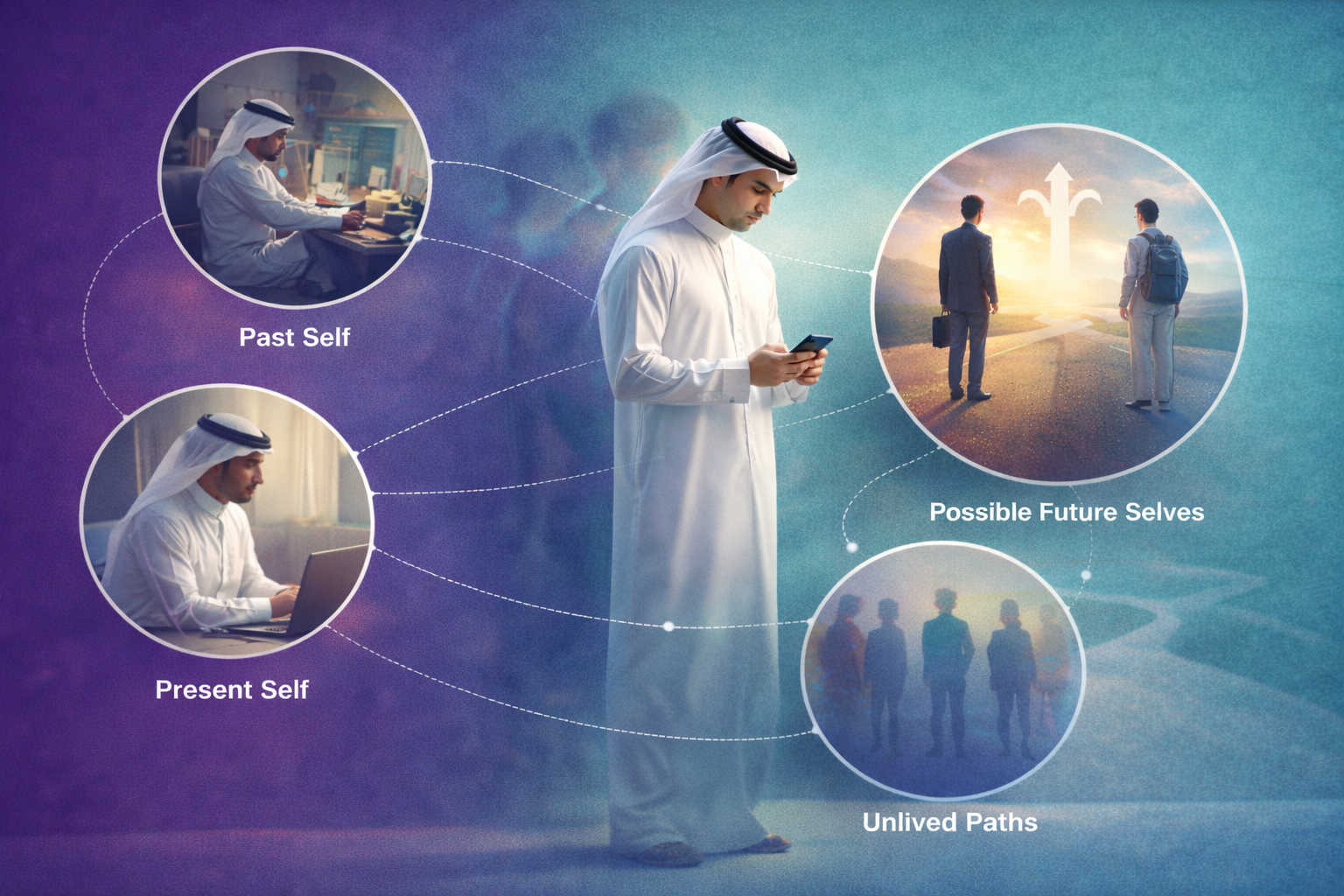
Why this project started
Mirror GPT did not start as a client project. It started as a pre-seed startup hypothesis.
The core question was simple but provocative:
What if people could meaningfully talk to their own digital identities — not just to AI trained on others’ data?
At a time when AI systems were increasingly trained on aggregated, external datasets, we wanted to explore a different direction: AI as a reflective interface to one’s own data.
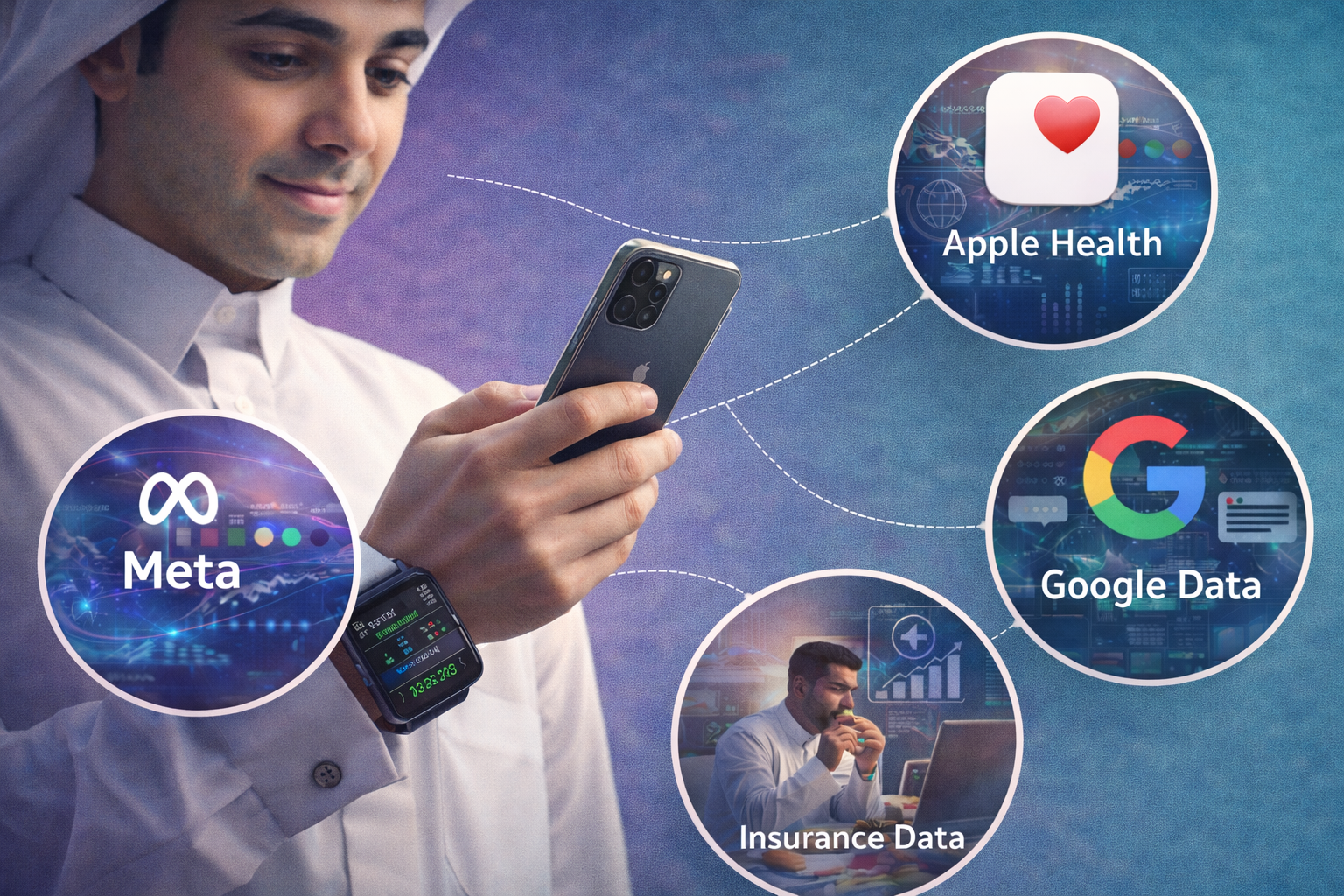
The hypothesis
We believed that:
People are surrounded by fragmented digital selves
Data exists, but meaning is missing
Reflection could become a new value layer
The hypothesis was that structured self-dialogue with personal data could unlock:
Reduced risk in high-stakes or habitual behaviors
More grounded, context-aware decision-making
Deeper self-understanding and self-empathy
New foundations of trust between humans and AI
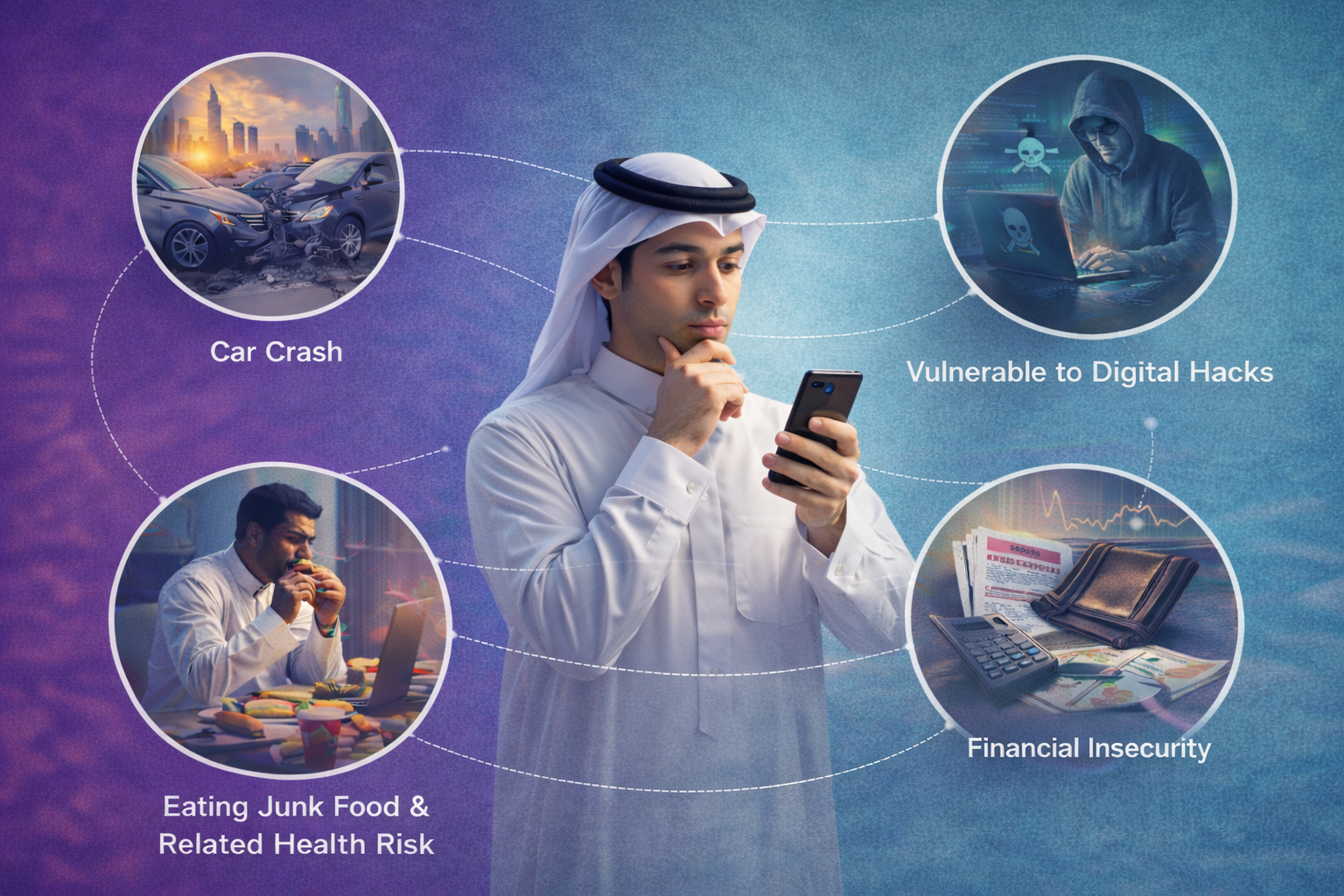
Why Insurance Was Explored
Insurance was explored as a strategic context because its business model is directly shaped by human behavior over time.
Qatar Insurance Group sits at a unique intersection where:
Individual decisions accumulate into long-term risk
Life transitions influence exposure and vulnerability
Trust determines both customer loyalty and compliance
Our hypothesis was that supporting reflection could reduce risky behavior, which in turn could:
Improve risk profiles across customer segments
Enable more meaningful, trust-based risk communication
Increase long-term value through prevention rather than reaction
Strengthen internal decision-making in uncertain environments
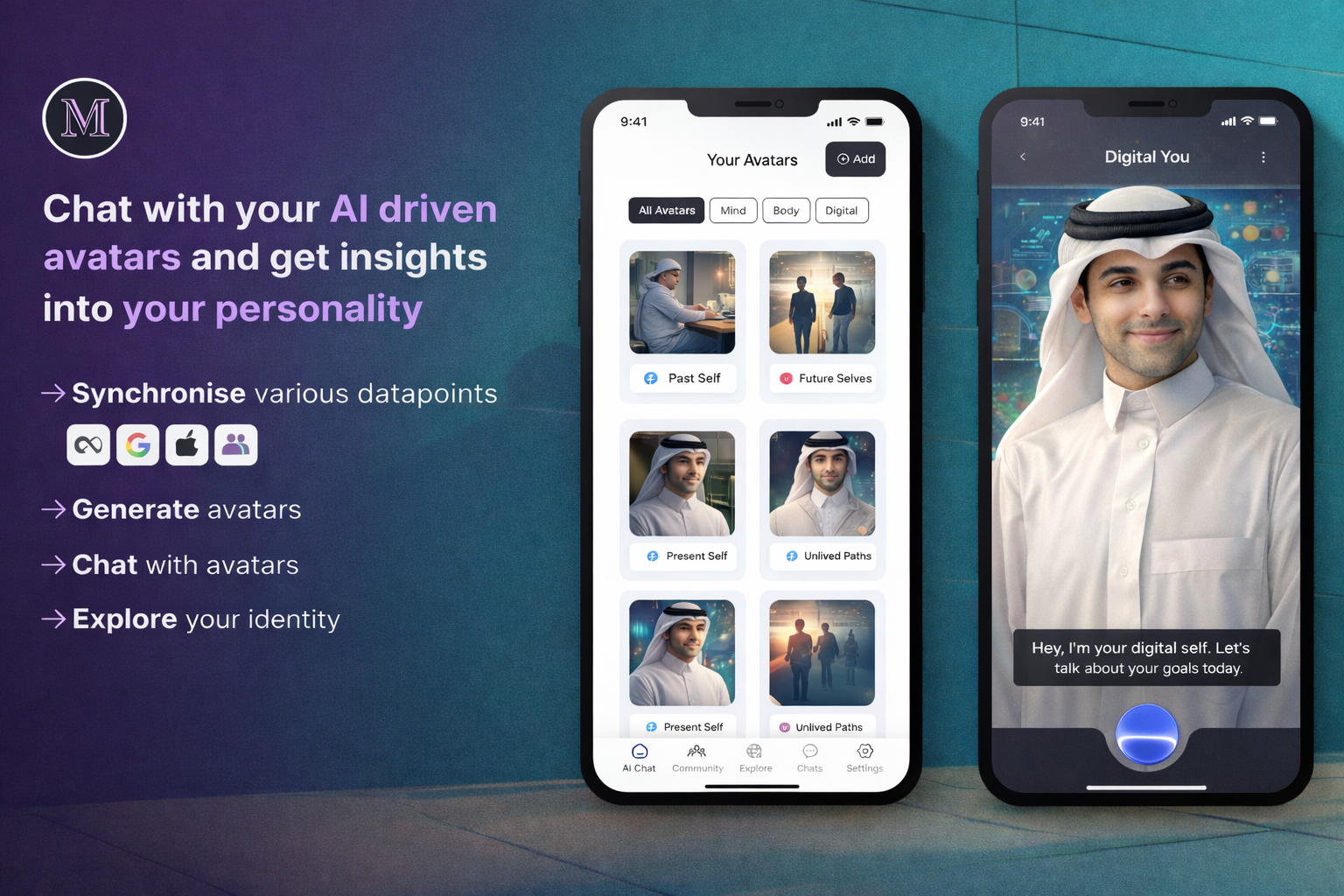
What Mirror GPT was (and wasn’t)
Mirror GPT was not:
A chatbot giving advice
A prediction engine
A wellness or coaching app
Mirror GPT was designed as:
A reflective system that mirrors language, assumptions, and patterns
A way to explore how someone thinks, not what they should do
A bridge between personal data and meaning
AI’s role was not to decide — but to help users see themselves more clearly.
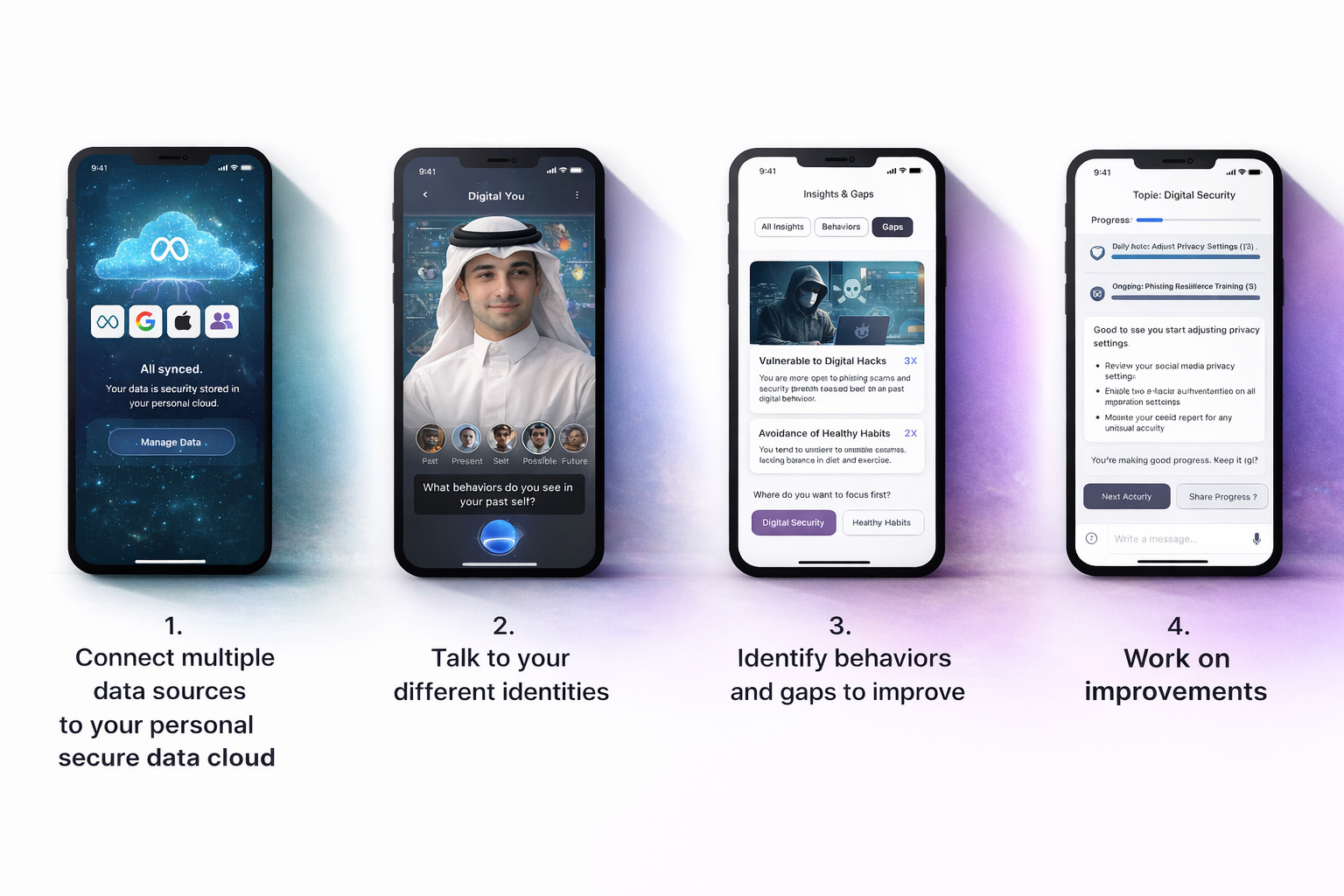
Data ownership & the Prefeena partnership
A critical pillar of the concept was data sovereignty.
We partnered with Prefeena to enable:
Secure, user-controlled data storage
Explicit consent over which data is used
Separation between AI interaction and raw data ownership
This allowed us to prototype a future where:
AI works with your data — without owning it.
What we built
Early conceptual architecture of reflective AI
Interaction flows for “talking to your digital identities”
Prototype scenarios combining stored personal data + AI reflection
Pitch decks and narratives for partners and investors
Strategic framing workshops with insurance stakeholders
The focus was learning — not scaling.
Validation & outcome
Through partner discussions, internal exploration, and investor pitching, we reached a clear conclusion:
While the concept showed strong philosophical and experiential value,
it did not demonstrate a clear strategic advantage for insurance to build at that time.
This was a valid negative outcome — and an important one.
The project was consciously not pushed further, avoiding solutionism without real pull.
What the project proved
Mirror GPT successfully demonstrated that:
People are willing to engage in reflective dialogue with AI
Talking to one’s own data feels fundamentally different than generic AI chat
The value lies in sense-making, not optimization
What it did not prove:
A sustainable insurance-specific business model
Clear short-term ROI for a regulated, risk-averse industry
My role as founder
Defined the venture hypothesis and narrative
Led partner discovery and validation
Designed the reflective AI interaction model
Translated abstract ideas into prototypes and pitches
Made the decision to stop when strategic value was not proven
Knowing when not to continue was part of the work.
Reflection
Mirror GPT deeply shaped my later thinking.
It reinforced a principle that continues to guide my work:
Not every meaningful idea should become a product —
but every tested idea should leave us with better understanding.
Many of the concepts explored here — reflection, orientation, identity, and AI as a mirror — continue to live on in my research, writing, and design practice