Designing a future service for Telefónica Alpha
Speculative Service Design · Future of Happiness · AI & Identity · 2018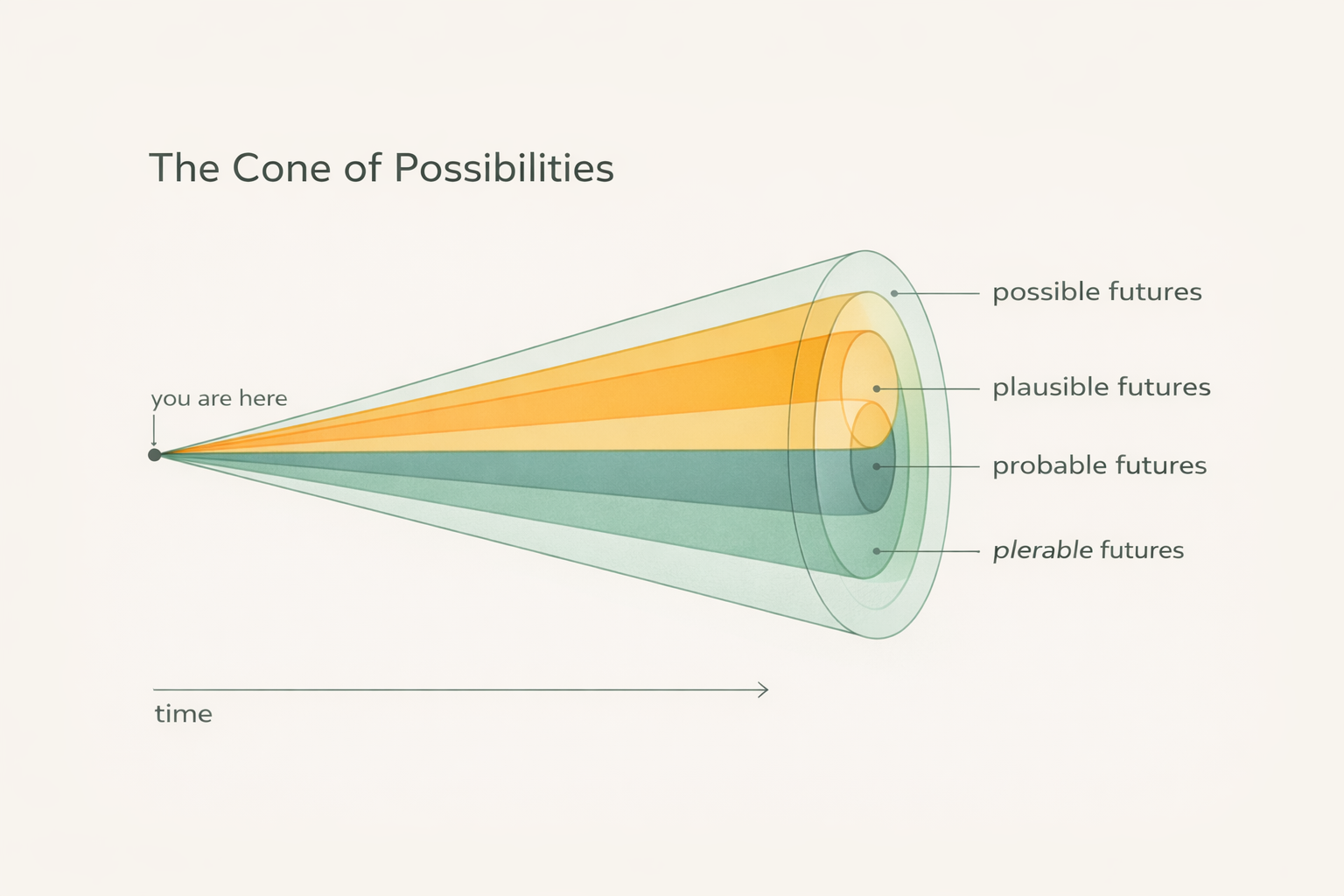
background
A speculative service design in collaboration with Telefónica Alpha Health and the Royal College of Art—focused not on predicting futures, but making them discussable.The ambition was bold:
to explore how emerging technologies could help people gain greater agency over their lives, leading to healthier and happier outcomes at planetary scale.
THE PROCESS
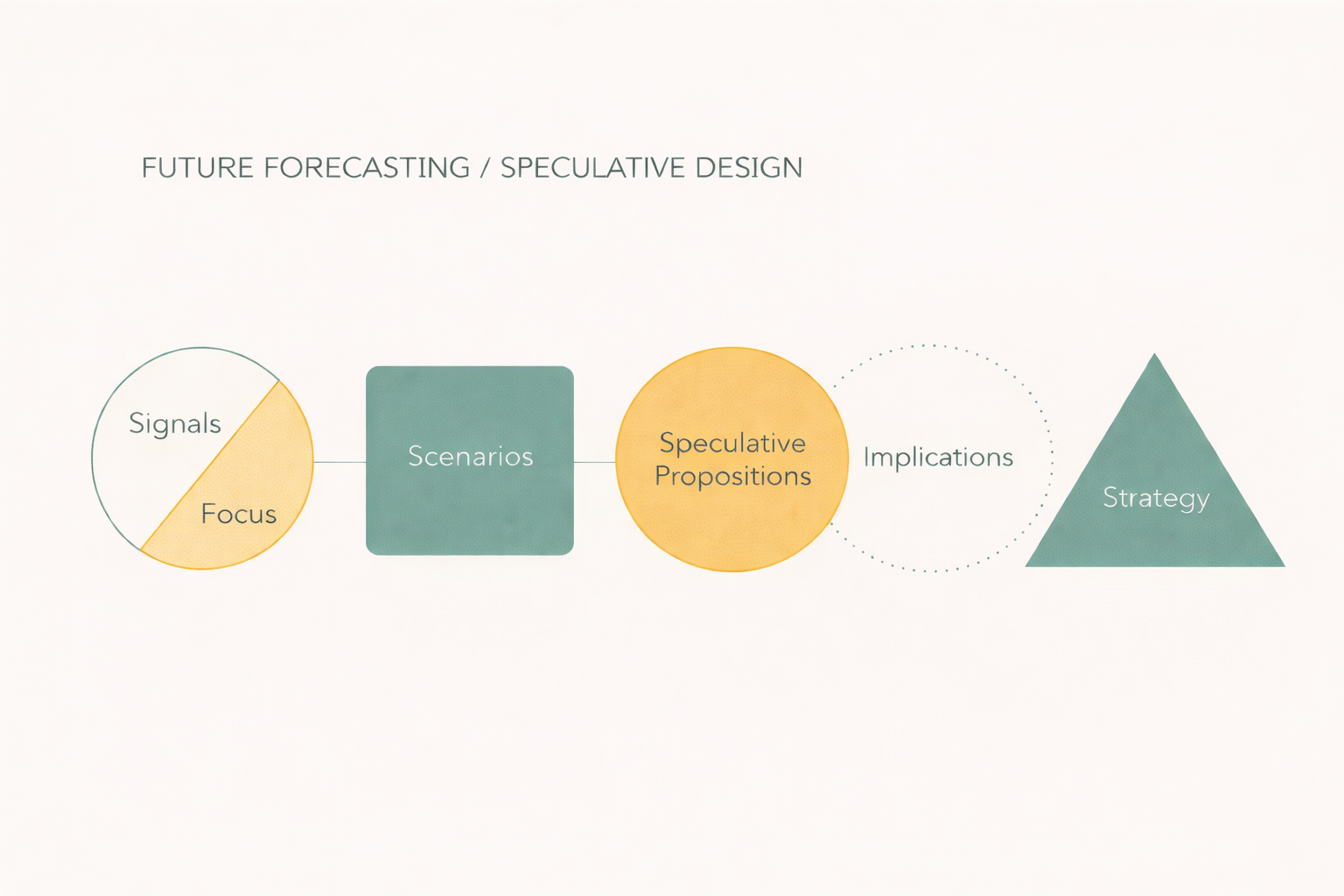
Speculative design begins by identifying present-day signals and focusing them into scenarios that explore alternative futures. These scenarios generate speculative propositions that make implications tangible and discussable, which are then distilled into strategy—providing long-term orientation without relying on prediction.
Key signals we identified
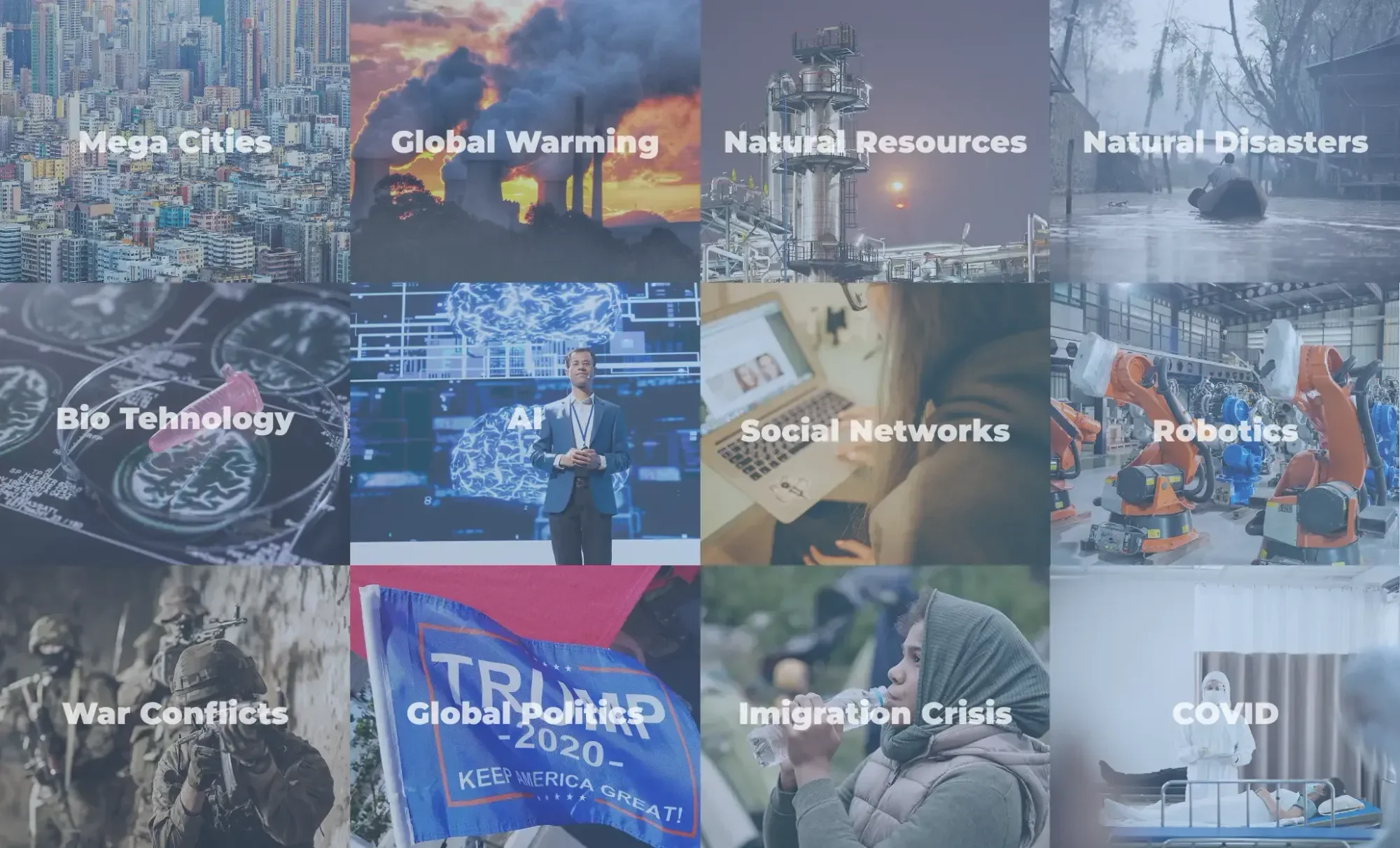
We began by mapping macro-level shifts across four domains:
Technology: AI, IoT, and bio-data
Society: Loneliness and ageing populations
Economy: Productivity pressure and data capitalism
Culture: Identity performance and self-optimization
From this mapping, three signals stood out.
1. The rise of self-quantification
People increasingly track sleep, focus, mood, productivity, and health. Measurement has become pervasive, yet data does not automatically translate into understanding.
2. Fragmented digital selves
Digital platforms encourage performative identity—multiple versions of the self, optimized for different contexts and audiences.
3. An uncontrollable data footprint
Life decisions—from employment and insurance to relationships and mobility—are increasingly shaped by data traces people barely recall creating.
As Michael Schrage notes,
“Digital innovation transforms self-improvement into selves-improvement.”
Taken together, these signals point toward a future in which happiness is no longer purely subjective, but increasingly computed, inferred, and nudged.

THE FOCUS: LONELINESS
Loneliness represents a significant and growing public health challenge in the UK. Data from the Office for National Statistics indicate that approximately 25–27 % of adults experience loneliness at least sometimes, with around 8 % reporting frequent or persistent loneliness (ONS, 2023). Empirical research links chronic loneliness to a ~26 % increase in all-cause mortality, elevated risk of cardiovascular disease, higher rates of hospitalisation, and poorer mental health outcomes (Campaign to End Loneliness, 2023; NCBI, 2020).
Given its prevalence and well-documented health consequences, we chose to focus on loneliness as a central area of inquiry in this project.
Reframing happiness
Through interviews and desk research, we identified two dominant understandings of happiness:
Momentary happiness
A temporary emotional state shaped by context, people, time, and place.Life satisfaction
Long-term wellbeing influenced by health, relationships, work, security, and meaning.
Across interviews, one theme kept returning:
Self-understanding precedes happiness.
Without self-knowledge, self-belief, and self-compassion, people struggle—not because they fail, but because they don’t know which version of themselves is speaking.

The future scenario: London, 2035
Life in megacities has become hyper-connected but emotionally distant.
People live alone in vertical housing
Work, care, and relationships are mediated by systems
Daily life happens partly in physical space, partly in augmented layers
Outside cities, smaller communities thrive on human cohesion, but with reduced access to opportunity.
At the same time, society is ageing.
Younger generations pursue self-actualisation early, while older generations work longer to sustain the economy.
This creates a deep tension:
Who am I—when I am many things at once?

The core problem
By 2035:
AI systems continuously interpret us
IoT devices sense our bodies and environments
Data creates parallel representations of who we are
Yet humans are still expected to experience themselves as a single, coherent “self.”
This creates friction.
How do you empathise with yourself — when you no longer know which self is “real”?
The opportunity
What if data didn’t only evaluate us — but helped us understand ourselves with kindness?
What if we could meet our data selves, rather than be silently governed by them?
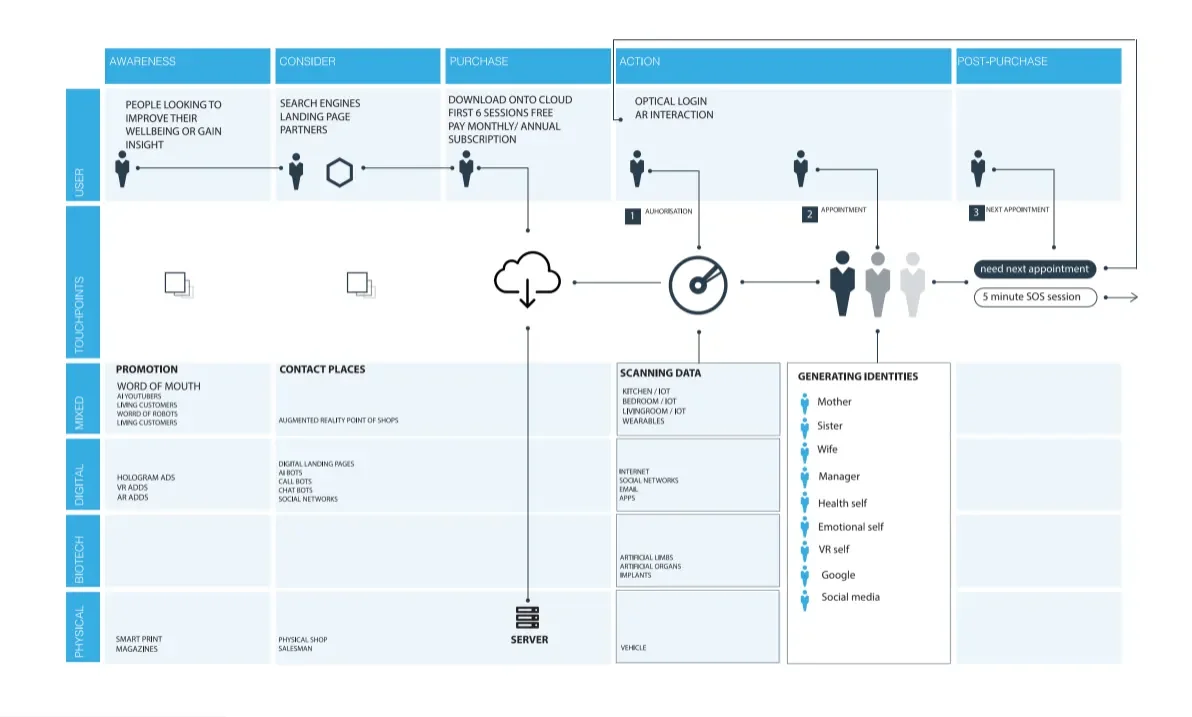
The proposal: Metaself
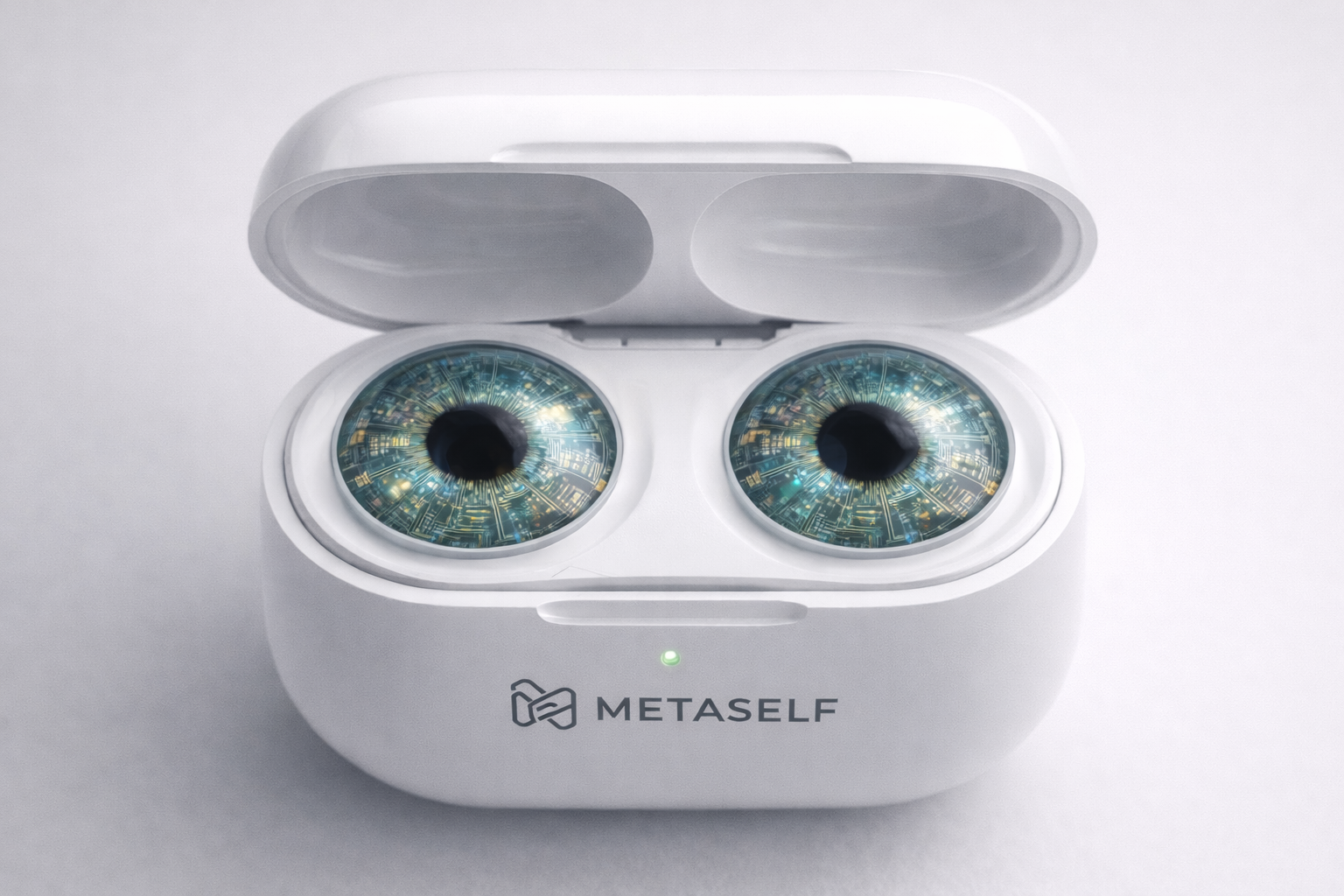
Metaself is a speculative service for 2035.
It allows people to encounter and converse with their different selves—as distinct but connected entities.
Using augmented reality and AI, users access a catalogue of their selves, such as:
Health self
Emotional self
Professional self
Caregiver self
Citizen self
Each self reflects real behavioural and emotional patterns drawn from lived data.

How it works
Users select which selves they want to engage with
Health and Emotional selves are always present
Sessions last one hour
Session structure
Dialogue phase (40 min)
Users discuss concerns, conflicts, or decisions with their different selves.Reflection phase (20 min)
Guided through principles of non-violent communication, users reflect, name needs, and practice self-compassion.
The goal is not optimisation. It is mediation.
Why this matters
Today, people already juggle:
Professional identity
Social identity
Digital identity
By 2035, this fragmentation intensifies.
Metaself reframes AI:
Not as an authority that tells you who you are — but as a mirror that helps you listen.
Reflection
Metaself is not a product proposal. It is a design question made tangible.
As technology accelerates, the risk is not losing control to machines — but losing empathy for ourselves.
This project asks: What if the future of happiness is not prediction—but understanding?